Malaysia has introduced two new regulated sea areas near the eastern approaches to the Traffic Separation Scheme in the Straits of Malacca and Singapore. The regulations affect routing, anchoring, speed, cargo transfer and bunkering operations.
Published 06 October 2026
Malaysia has established a Marine Sensitive Area (MSA) and Designated Fairways or Sea Lanes near the eastern approaches to the Traffic Separation Scheme (TSS) in the Straits of Malacca and Singapore. The MSA took effect on 11 September 2026 under the Marine Sensitive Area Notice 01/2026. It aims to protect, preserve and conserve marine resources and to prevent and reduce pollution.
These measures are the latest development in Malaysia’s broader regulatory approach to waters east of Singapore, complementing Malaysia's Exclusive Economic Zone Regulations 2026 and affecting areas often known within the industry as the Outer Port Limits (OPL).
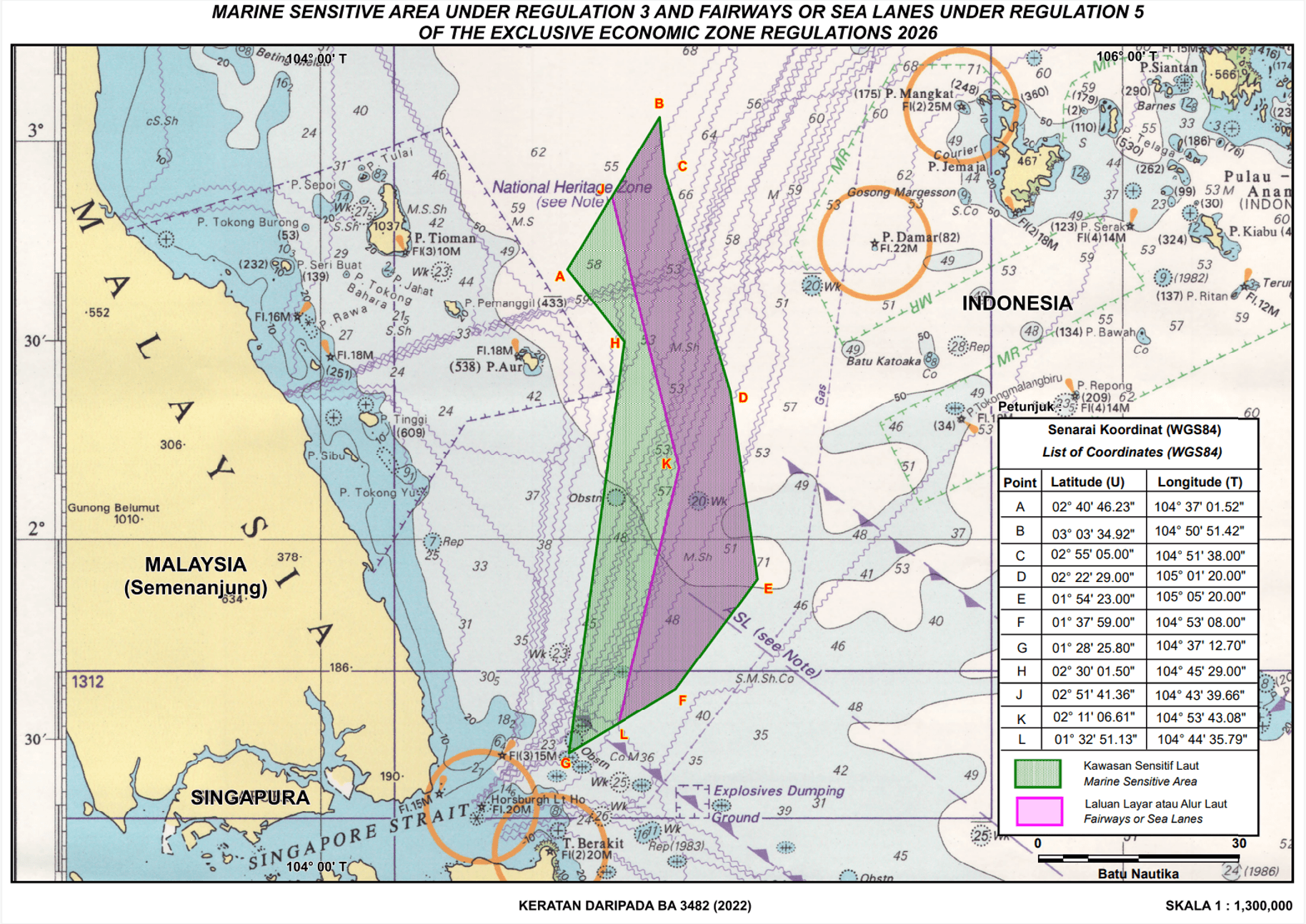
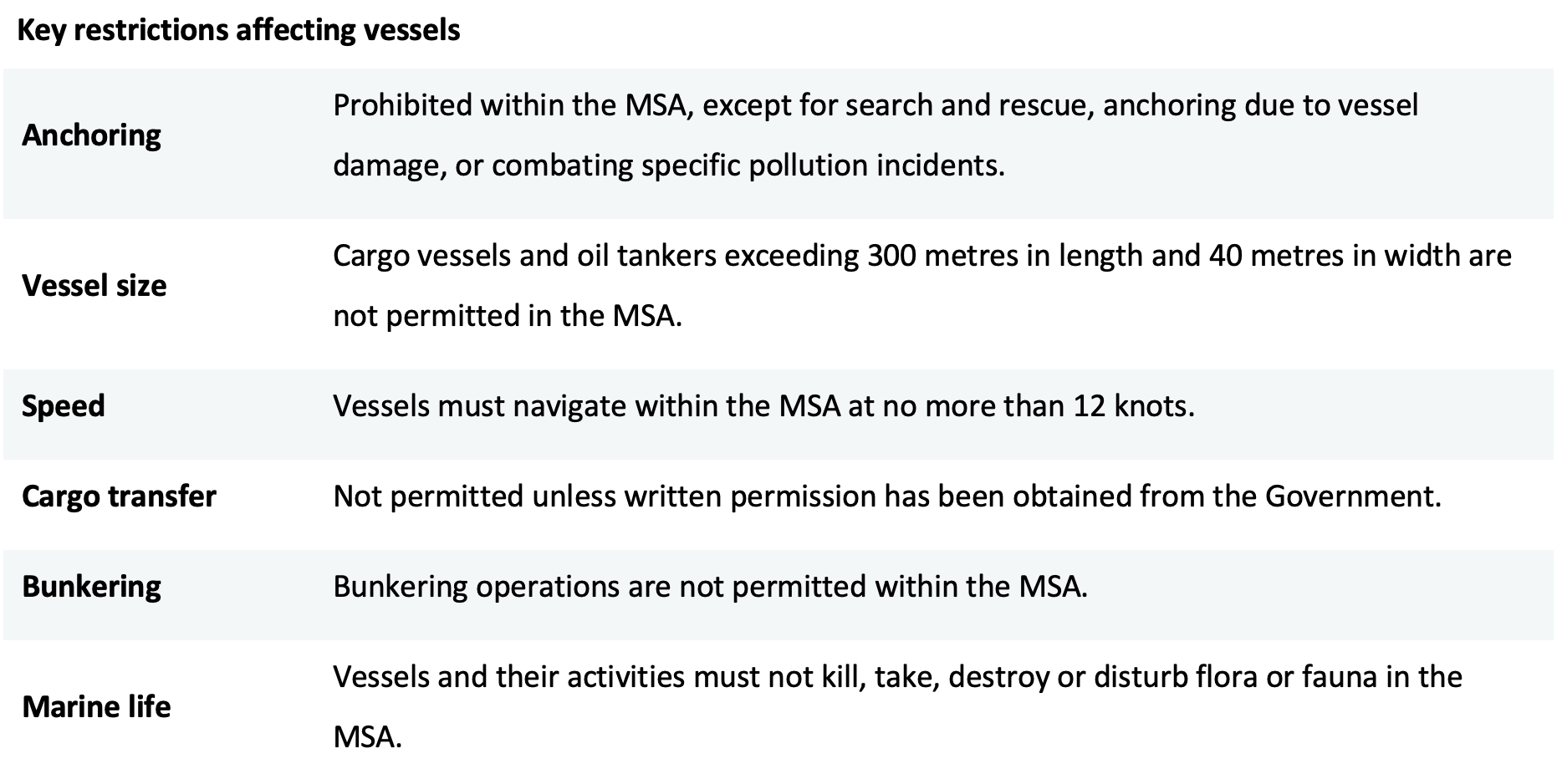
Changes to traffic patterns near the eastern approaches to the Singapore Straits
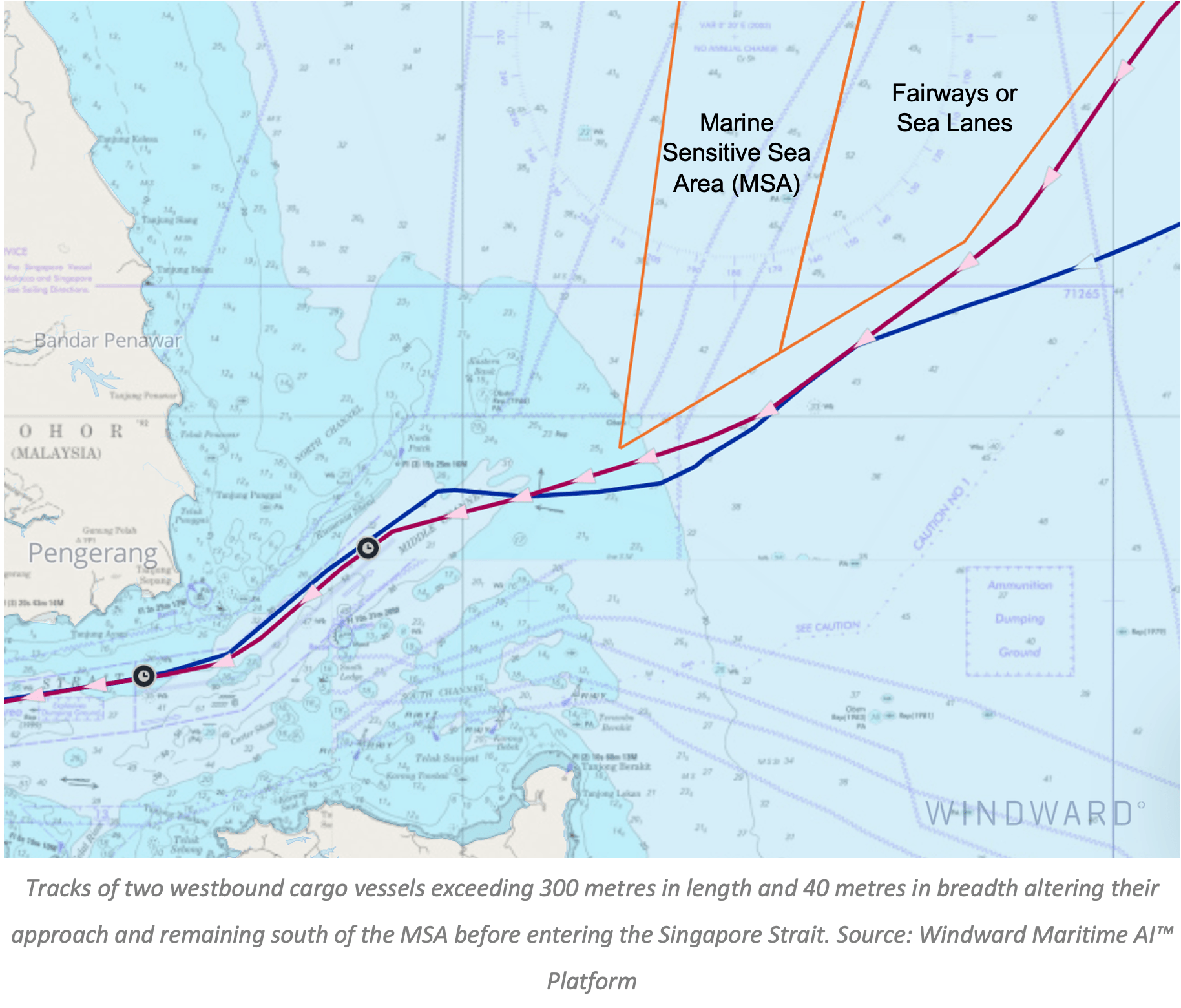
In addition to the operational restrictions, the MSA may affect traffic patterns at the eastern approaches to the Singapore Strait. Some westbound vessels may remain south of the area before turning towards the westbound lane, rather than joining the traffic flow further east. This may lead to greater concentrations of converging and crossing traffic near the eastern approaches to the Singapore Straits, increasing collision risk and bridge team workload. Operators should consider these altered traffic patterns during voyage planning and ensure bridge teams maintain heightened situational awareness when approaching the area.
Enforcement and potential penalties
According to Gard’s local correspondent, SPICA, Malaysian authorities may conduct compliance checks of vessels within the MSA area. Vessels that are unable to produce the required approvals or authorisations may be detained. SPICA also advises that breaches of the MSA Notice may lead to prosecution before the Malaysian courts. Penalties may be significant and can reportedly reach MYR 1,000,000. That said, as the regulation is new, uncertainty remains regarding the practical enforcement approach, particularly for vessels that are merely transiting through the new MSA area and have no intention of calling at Malaysian ports.
Operators should also be aware that previous enforcement actions by the Malaysian Maritime Enforcement Agency (MMEA) against vessels anchoring within Malaysian territorial waters without the required approvals have resulted in vessels being detained, fined, and, in some cases, required to provide financial security before being allowed to proceed. For further background, see Gard's article, "Reminder - Anchoring in Malaysian Waters off East Johor".
Recommendations
Review voyage planning procedures for vessels operating in the area and ensure that the areas identified in MSA Notice 01/2026 are incorporated into passage plans, routing assessments, and operational risk reviews.
Ensure masters and bridge teams are familiar with the restrictions applicable within the MSA, including entry limitations, anchoring prohibitions and speed requirements.
Engage local agents and, where necessary, the relevant Malaysian authorities when planning operations in the area.
Consider the use of designated anchorages where appropriate and monitor regulatory developments and enforcement guidance issued by the Malaysian authorities.
References
Related Articles



Gard is a member of