A serious engine-room incident shows how quickly a local bearing failure can escalate – even when standard temperature and pressure readings appear to be normal.
Written by

Published 07 September 2026
Bearing temperature measurements are a critical part of machinery condition monitoring. However, experience shows that such measurements should be considered alongside other monitoring systems and inspection findings.
Crew burn injuries and vessel damage
Last year, a bearing failure on a container vessel caused rapid heat generation, oil mist formation, crankcase overpressure and machinery damage. A crew member suffered serious burn injuries from the incident, and the vessel had to be towed from the North Atlantic to Freeport, Bahamas for repairs.
The immediate cause was identified as the failure of the aft bearing on the upper intermediate gear. The bearing shell failure led to metal-on-metal contact and rotation of the bearing shell in the gear bearing housing. The rotation of the shell closed the oil inlet bore, cutting lubrication to the bearing. With no oil supply, the excessive friction generated heat, creating a hotspot and catastrophic bearing damage.
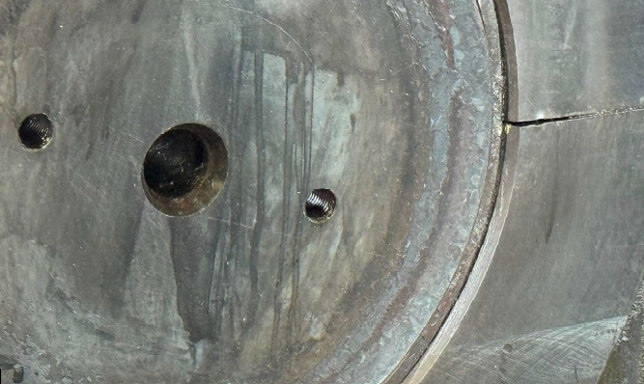
Upper intermediate gear severely affected by heat due to friction. Source: Brookes Bell.
The heat development created a flammable oil mist in the upper crankcase, an area not protected by oil mist detectors. When the mist ignited, the resulting crankcase over-pressure activated the crankcase relief valves. Eighteen engine-room doors buckled and were displaced from their hinges.
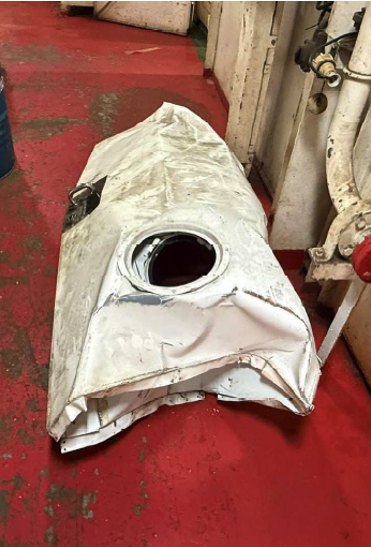
Engine room doors severely damaged from pressure after crankcase deflagration. Source: Brookes Bell.
Normal readings right before
The incident developed extremely quickly. Alarms for an abnormal oil mist detector, main-engine slowdown, engine-room fire and activation of the local firefighting system were recorded within just four seconds. Before this, the engine’s standard pressure and temperature readings had remained normal.
This is significant because it shows that a local bearing failure can develop into a major incident before conventional monitoring systems provide a clear warning.
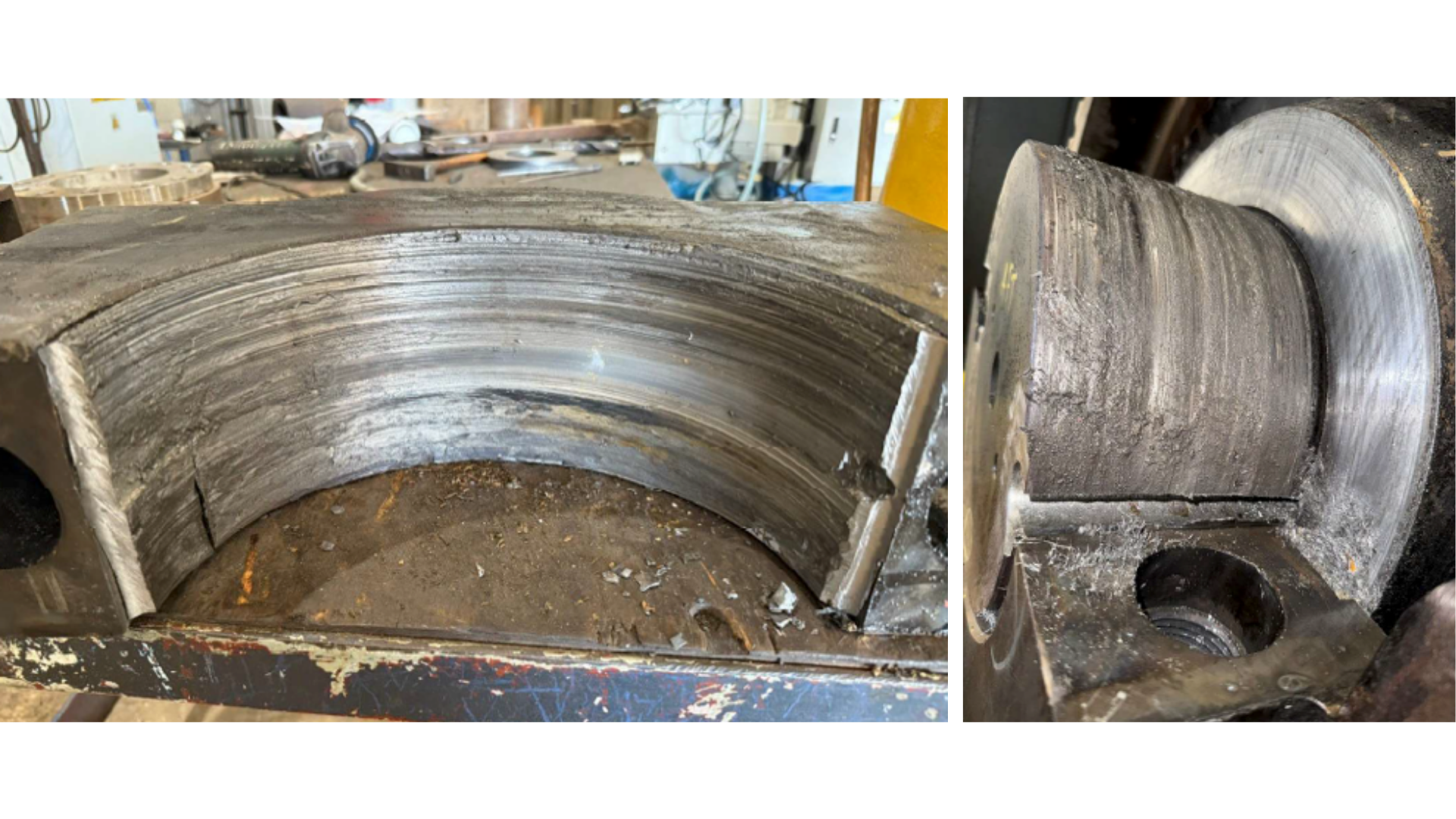
Left: Upper intermediate bearing after removal from the upper intermediate shaft. Right: Upper intermediate shaft after removal of bearing saddle. Source: Brookes Bell.
The investigation found no evidence of poor maintenance, oil contamination or restricted oil supply. The oil bores and piping were clear, and oil samples were within acceptable limits. Misalignment was also ruled out, and wear on the gear teeth was normal. The damage was limited to the aft gear bearing, while the other bearings in the same lubrication system were unaffected.
Recommendations
This case highlights the limits of conventional engine parameter monitoring. Effective condition monitoring should combine additional temperature measurement trends with information from oil mist detectors, lubrication systems, vibration monitoring, alignment checks and physical inspections.
The maritime industry is increasingly introducing enhanced bearing-monitoring systems. These can measure additional bearing temperatures in real time and trigger alarms, automatic load reduction or engine shutdown when abnormal temperatures or trends are detected. Such systems can help prevent overheating, engine damage and costly downtime.
Where monitoring data is available, it should be retained together with timestamps, engine load, rpm, lubricating-oil pressure and temperature, alarm history and other relevant sensor data. This information may be important when identifying warning signs and investigating an incident.
The key lesson is that bearing temperature monitoring is essential, but not sufficient on its own. Even normal engine readings do not rule out a localised bearing failure. The most effective approach combines temperature trends with other monitoring data, physical inspections and manufacturer guidance. This ensures that any warning signs are acted upon quickly.
Related Articles


Gard is a member of